In December 2024, South Africa stood before the International Court of Justice and accused Israel of genocide. In February 2025, South Africa’s president hosted the G20 and conducted himself as the senior statesman in the room while the American delegation struggled to command attention. In February 2026, Zimbabwe rejected a $367 million American health agreement. Zambia rejected a similar deal after the United States linked it to access to Zambian copper and cobalt. Kenya’s High Court froze implementation of its agreement after legal challenges over data privacy.
American commentators treated each of these events as isolated. They were not.
These are outputs of a single operating system. That operating system has been running for centuries. The failure to recognize it as such is the most consequential analytical gap in American foreign policy toward Africa today.
The Miscalculation
The structure of the agreements that Zimbabwe and Zambia rejected reveals what Washington actually thinks about African sovereignty. The American health memorandum of understanding demanded comprehensive access to Zimbabwe’s biological resources and epidemiological data. It offered no reciprocal data sharing from the United States. It guaranteed no access to medical innovations developed from that data. The Zambian deal explicitly linked health funding to access to Zambian minerals. These are not partnership structures. They are extraction structures dressed in the language of aid.
The operating assumption behind these deal structures is that sovereignty talk is performance covering a price negotiation. That African leaders say “partnership of equals” but mean “how much for me personally.” The entire architecture of the offer presupposes this framework. Call it the Swiss Bank Account Assumption: the belief that the right dollar figure, routed to the right people, converts any stated principle into a signed document.
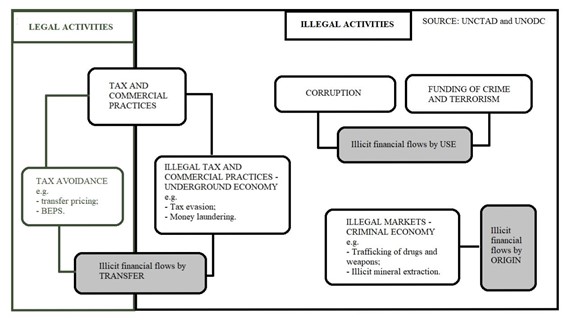
The historical neo-colonial flow of funds driving US State Department's monolithic theory of African political elites mind
This assumption is not unique to the current administration. It is the default Western model for engaging African governments, and it has been for decades. The corruption frame performs double duty in Western strategic thinking. First, it explains African poverty: leaders steal everything. Second, it provides the engagement template: structure deals that enrich the right people. Liberal and conservative versions differ only in routing. Liberals channel payment through NGOs and development institutions. Conservatives cut bilateral deals that bypass the “NGO industrial complex”—the administration’s own framing when it rolled out its Africa health memoranda in December 2025.
Both versions rest on the same foundational error. They assume that African leaders who invoke sovereignty are performing for a domestic audience while privately negotiating personal terms. They assume that institutional rhetoric about “equal partnership” and “mutual respect” is theater, not policy.
Zimbabwe’s government spokesperson, Nick Mangwana, issued a public statement on February 25, 2026, in response to a leak of the presidential directive terminating negotiations. The directive itself was dated December 23, 2025—two months earlier. The statement opened with standard diplomatic courtesy, then laid out the substance: the deal was “at its core, asymmetrical.” Zimbabwe would provide raw materials for scientific discovery with no assurance that the resulting products would be accessible to its people. Zimbabwe insisted that pathogen data sharing occur exclusively through the World Health Organization’s multilateral system, not through bilateral arrangements with a country that had withdrawn from the WHO the previous month. The statement closed by noting that this “should not be misconstrued as anti-American sentiment” but was rather “a sign of Africa’s maturation as a geopolitical actor, one that seeks partnerships based on equality rather than patronage.”

Every sentence in that statement was delivered in the precise register that Western institutional grammar classifies as legitimate diplomatic communication. Every substantive claim was accurate and verifiable. And the content was structured so that every available response within that grammar was self-defeating. Agree with the principle of equal partnership, and you concede the deal was unequal. Dispute the characterization of asymmetry, and the deal terms are public. Dismiss the statement as posturing, and you validate the argument about patronage. Ignore it entirely, and you confirm that the United States does not treat African sovereignty assertions as legitimate.
The American conservative media apparatus—Fox News, the Daily Wire, Breitbart—produced zero coverage of Zimbabwe’s rejection, Zambia’s rejection, or Kenya’s legal challenge. Zero. The silence is the data point. The administration’s ready-made frame for this situation—ungrateful country rejects generous American aid—went entirely unused. It went unused because the specifics of each rejection were poisonous to every available narrative frame. Zimbabwe’s data sovereignty argument uses conservative rhetoric about government overreach against the United States. Zambia’s mineral-access linkage is indefensible through any populist lens. The details could not be surfaced without raising questions that the administration’s own base would find uncomfortable.
The system locked up. Not because left and right agreed on the response, but because the cultural machinery through which both operate has the same vulnerability: it cannot process a well-formed move that it cannot answer within its own rules.
The Operating System
The American analytical framework has no category for what is actually happening. The available slots for African states are: failed state, corrupt kleptocracy, developing country grateful for aid, or proxy of a rival power. The category “polity with centuries of experience managing European powers, currently holding critical leverage in the global energy transition” does not exist in the taxonomy. And so the outputs of that operating system are consistently misread as isolated events rather than as the predictable behavior of sophisticated actors executing from well-established institutional patterns.
Those patterns have a specific history. It is not the history that American policymakers lack because the information is hidden. They lack it because the mental model has no slot for it.
Managing Europeans as Subordinates
The Mutapa Empire controlled the Zimbabwean Plateau and its gold trade from the mid-fifteenth century. Portuguese traders arrived at the coast in 1506 and gained control of the port of Sofala. The Mutapa state’s response was not to resist trade but to absorb the Portuguese into its own political grammar. Coastal traders—first Swahili, then Portuguese—were symbolically accommodated into the Mutapa political structure as the king’s “wives,” fitting foreign actors into existing categories of subordination. A Captain of the Gates controlled their access to the capital, regulated their trade, collected duties on every incoming convoy, and settled conflicts between Portuguese and Africans. Portuguese required permission to approach the capital, were prohibited from carrying firearms, and were required to approach the king barefooted.
This arrangement held for over a century. The Portuguese were not excluded from economic participation. They were included on Mutapa’s terms, within Mutapa’s institutional framework, under Mutapa’s rules. The distinction matters. Exclusion is a defensive posture. Subordinated inclusion is an assertion of sovereignty over the terms of engagement.
Expel, Then Re-engage on Your Terms
Portuguese interference escalated through the sixteenth and seventeenth centuries. By 1629, a treaty allowed Portuguese settlement within Mutapa territory. Portuguese estate holders established fortified settlements. In 1663, they deposed the Mwenemutapa and installed their own nominee. The institutional framework of managed inclusion had been subverted from within.

The response came from Changamire Dombo, a cattle baron in the declining empire’s southern regions. Dombo built the Rozvi state explicitly as an anti-Portuguese project. The name itself is Rozvi, from the Shona word meaning “to plunder” encoded the program. In 1684, Rozvi archers met Portuguese musketeers at the Battle of Maungwe and defeated them decisively. Between 1692 and 1695, Rozvi forces systematically conquered and destroyed Portuguese forts and trading posts across the interior, driving Portuguese influence back to a few small coastal stations in Mozambique.
Then the Rozvi did something that the Western analytical framework consistently fails to anticipate. They did not isolate themselves. They re-entered a trading relationship with the Portuguese, with the Rozvi holding the dominant position. Expel, then re-engage on restructured terms. Not isolation. Restructured asymmetry.
The Cautionary Case
Lobengula, king of the Ndebele state from 1870, provides the counter-case that lives in Zimbabwean political memory as a warning. Lobengula was sophisticated. He maintained strict limits on who could enter his kingdom. He played European factions against each other. In February 1888, he signed the Moffat Treaty—a treaty of friendship with the British—which the British government distorted to declare his kingdom a protectorate. In October 1888, he signed what he understood to be a limited mineral concession with Cecil Rhodes’s associates. The document was manipulated to appear as a total concession of his kingdom, and was used to charter the British South Africa Company in 1889.
Lobengula attempted to counter by granting a competing concession to a Boer representative—a lease granting rights to portions of Ndebele land for one hundred years. The Boer representative sold the concession directly to the company Lobengula had been trying to outflank. Lobengula canceled the concession and ordered the British out. He had only spears to enforce the order. The British ignored it. He wrote to Queen Victoria: “The white people are troubling me much about gold. If the queen hears that I have given away the whole country, it is not so.”
The Maxim gun settled it. In 1893, the Ndebele army was destroyed by British firepower. Lobengula burned his capital rather than have it taken and died fleeing north. Within two years, the country was called Rhodesia.
The Rudd Concession is the template for what Zimbabwe’s PEPFAR rejection is designed to prevent. You sign what you think is a limited agreement. You discover the other party treats it as total surrender. This is not historical trivia in Harare. It is operational memory.
Training Inside Bad-Faith Frameworks
The Lancaster House Conference of 1979 ran from September to December—forty-seven plenary sessions over which the terms of Zimbabwe’s independence were negotiated. British Foreign Secretary Lord Carrington chaired. The British strategy, documented in subsequently released diplomatic correspondence, was to bring rival factions face-to-face and keep them talking through crises—while actively hoping that the Patriotic Front would walk out, giving Britain the procedural justification to recognize the more pliable Muzorewa government.
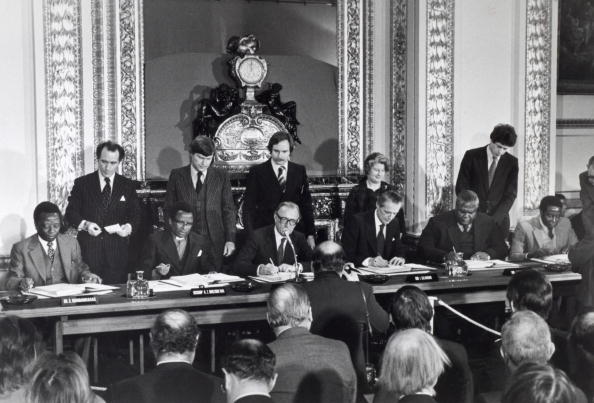
ZANU’s counter-strategy was to stay at the table regardless. Edgar Tekere, ZANU’s Secretary General, told a British diplomat that ZANU would come to any meeting called, even if only to say they could not accept the proposals. The skill was not in winning arguments. It was in understanding the procedural trap and refusing to spring it. Every walkout threat from the Patriotic Front that did not materialize was a failure of the British strategy. ZANU won by denying its opponent the procedural excuse it needed.
South Africa’s liberation movement ran a parallel curriculum at continental scale. The African National Congress operated inside every Western institutional space simultaneously—the United Nations, the Commonwealth, the International Labor Organization, UNESCO, the Non-Aligned Movement—making the system’s own rules produce outcomes the system’s dominant powers did not want. International solidarity was not supplementary to the ANC’s strategy. It was one of the four defined pillars of struggle, and it was the pillar that delivered the decisive economic pressure when Chase Manhattan Bank refused to renew short-term loans to South Africa in 1985, triggering a liquidity crisis that cascaded through the apartheid economy.
Both Zimbabwe’s and South Africa’s political establishments were forged in liberation struggles where mastering Western institutional rhetoric was an operational requirement for survival. These were not postcolonial states learning Western norms from textbooks. These were settler-colonial states—where a white minority built a complete institutional apparatus of courts, media, financial systems, security forces, and diplomatic framing, all operating on your land, in front of you, for generations. You did not learn about Western institutional power as an abstraction. You watched it function as a lived system of control. You learned the actual mechanics, not the stated principles, because the gap between the two was the space you inhabited every day.
The negotiated transitions such as Lancaster House and CODESA were the final examination. Liberation movements sat across the table from the people who had been running the system and negotiated within institutional frameworks those same people had designed. This was advanced training in operating inside structures built by the opposing party.
The Leverage Shift
History explains the operating system. It does not, by itself, explain why the operating system is producing different outputs now than it did ten or twenty years ago. The variable that has changed is leverage.
Zimbabwe holds the world’s second-largest known platinum reserves, fourth-most productive lithium deposits, chrome, and diamonds. Zambia’s copper belt is foundational to global electrification. The Democratic Republic of the Congo controls the majority of the world’s cobalt supply. South Africa holds dominant positions in platinum group metals, manganese, and chrome. These are not commodity exports that can be substituted or bypassed. They are chokepoints in the green energy transition supply chain.
The countries sitting on these resources increasingly understand their structural position. The green transition is not optional for any industrialized economy. It requires specific minerals in specific quantities from specific geographies. The leverage this confers is not theoretical. It is the kind of leverage that restructures the terms on which deals are offered.
Compounding the mineral leverage is what might be called sanctions education. Zimbabwe has operated under various Western sanctions regimes since 2001. Twenty-five years is not deprivation. It is curriculum. Under sustained sanctions, a state learns which Western leverage is real—SWIFT access, capital markets—and which is performative—diplomatic censure, travel bans on officials. It learns that China, Russia, the UAE, and India will engage on terms that do not require pretending the relationship is about values rather than interests. It learns that Western institutional approval, once understood as a prerequisite for economic participation, is in fact optional.
The BRICS expansion is the structural proof of concept. It is not merely an alternative funding source. It is a demonstrated, functioning alternative to the Western institutional architecture, one that does not require partners to adopt the performative scripts of liberal democratic governance as a condition of participation. When Zimbabwe sits across the table from the United States to negotiate a health agreement, it is not choosing between the American deal and nothing. It is choosing between competing offers. The psychological architecture of dependency is broken.

The Installation
On February 26, 2026, Oman-mediated negotiations in Geneva produced what multiple parties described as a breakthrough: Iran agreed in principle to “zero stockpiling” of enriched uranium. The framework had been facilitated over months by Qatar and Oman, two Gulf states that had built their strategic identities around mediation, neutrality, and institutional reliability. Qatar hosted the channel. Oman provided the diplomatic architecture. Both operated in good faith within the framework they understood to be the actual mechanism through which the decision would be made.
Forty-eight hours later, the United States and Israel launched Operation Epic Fury. Over a thousand targets were struck in the opening wave. Iran’s supreme leader was killed. The decision to strike had been locked approximately two weeks earlier, during Israeli Prime Minister Netanyahu’s visit to Washington. The negotiations were not a parallel track to the military option. The military option was the decision. The negotiations were the stage dressing.
Qatar is now intercepting Iranian ballistic missiles over its own territory. Oman is on the list of fourteen countries from which Americans are being urged to evacuate. The UAE—which built itself into the commercial hub of the Gulf on the premise that alignment with the United States provided stability—is watching Amazon data centers burn on its soil and Iranian drones strike luxury hotels in Dubai. Kuwait’s embassy is closed. Saudi Arabia’s embassy was hit by drones. Bahrain is pulling missile fragments out of residential buildings.
None of these states were consulted on the operation. All of them are absorbing its consequences. Iran’s foreign minister has stated repeatedly that Tehran’s fight is not with its Gulf neighbors but with the American military assets they host. The distinction is operationally meaningless when missiles are landing on your territory, but it is strategically precise: it tells every Gulf state that the cost of American partnership is denominated in their infrastructure, their citizens, and their sovereignty.
Qatar’s foreign ministry spokesman said on Day 4 that Iran’s attacks “will not go unanswered, and today all options are open to Qatar.” The UAE said the strikes “will not go unanswered” and reserved “its full right to respond.” These statements are not directed at Iran alone. “All options are open” is a state announcing that it is reassessing its entire alignment architecture. It is delivered in the same register Zimbabwe used three days earlier—legitimate diplomatic language, accurate characterization of facts, structured so that every available American response is self-defeating.
This is the Lobengula scenario playing out in real time, with one critical difference. Lobengula sat at the table, facilitated in good faith, believed the institutional framework was the actual mechanism, and discovered that the decision had already been made elsewhere. He had spears to enforce his objections. Qatar has sovereign wealth funds, liquefied natural gas leverage, Al Jazeera, and a demonstrated track record of strategic repositioning. The UAE has the world’s most sophisticated sovereign investment portfolio and economic relationships with every major power. Saudi Arabia has OPEC. These are not states that will be destroyed by the discovery that their partner’s institutional frameworks are theater. They are states that will be educated by it.
The curriculum is the same one Zimbabwe completed over twenty-five years of sanctions and South Africa completed over decades of liberation struggle: alignment with the United States does not mean the United States will account for your interests when it makes decisions that affect you. Western institutional approval is optional rather than prerequisite. Alternative architectures exist and function. Sovereignty assertions delivered in the correct institutional register cannot be dismissed without cost.
The difference is speed. What took southern Africa decades to learn through sanctions, liberation wars, and negotiated transitions, the Gulf states are learning in a week. The operating system is being installed in real time, on camera, while Amazon Web Services posts service degradation notices and American diplomats tell their own citizens not to rely on the United States government for evacuation.
The Implication
South Africa filed a genocide case at the International Court of Justice—not a protest, not a statement, but a filing in an institution the West built and claims to respect. Zimbabwe rejected a health agreement using the language of data sovereignty and multilateral frameworks—the precise vocabulary that Western institutions use to describe their own norms. Zambia exposed a mineral-access linkage that the administration could not defend and chose not to discuss. Kenya’s judiciary independently blocked implementation on privacy grounds that any Western court would recognize.
Each of these actions used the system’s own mechanisms. Each was delivered in the register the system must treat as legitimate. Each made engagement by the other party self-defeating within the system’s own rules. This is not coincidence. It is the consistent output of an operating system that has been refined through centuries of managing, expelling, re-engaging, negotiating with, and surviving European and American power.
That operating system is now replicating. The Gulf states that facilitated American diplomacy in good faith and absorbed the consequences of American military action without consultation are running the same calculations Zimbabwe ran when it read the PEPFAR memorandum: what does this deal structure reveal about how our partner actually regards our sovereignty? And they are arriving at the same answer.
The miscalculation—the Swiss Bank Account Assumption—persists because it is structurally comfortable. It allows American policymakers to interpret sovereignty assertions as noise in a price negotiation rather than as the stated and actual policy of the counterparty. It preserves the mental model in which American leverage is decisive and the agency of others is conditional. And it continues to produce failed negotiations, rejected agreements, lost strategic positions, and now, allies publicly announcing that all options are open.
The countries holding the critical minerals that American industrial policy requires for the energy transition are the same countries whose political establishments were forged in liberation struggles against Western institutional power, who spent decades learning to operate inside bad-faith frameworks, and who have now built alternative economic relationships that make Western approval optional. The countries hosting the military bases that American force projection requires for regional operations are now watching their own infrastructure burn because of decisions made without their consultation, and they have the sovereign wealth, energy leverage, and alternative partnerships to act on what they are learning.
The question is not whether these countries will continue to assert sovereignty on terms that Washington finds surprising. They will. The question is how many failed negotiations, rejected agreements, burned embassies, and stranded citizens it will take before American policymakers update the model.
The evidence to date suggests the answer is: more than have occurred so far.