
Maximize the Financial Performance of Your Energy Assets
Recover hidden production losses, reduce operational risk, and unlock new revenue opportunities across your energy portfolio with AI-powered operational intelligence.
What Challenge Are You Solving?
Asoba helps energy operators improve asset performance, unlock new revenue opportunities, and reduce energy costs. Start with the challenge you're trying to solve.
We're losing performance & don't know why
- Underperforming assets
- Hidden production losses
- Reactive maintenance
- Multiple OEM dashboards
Detect performance issues early, quantify Energy-at-Risk, and prioritize maintenance actions before revenue is lost.
Explore EAR Reports →We need to unlock value from existing assets
- Unused carbon value
- Manual reporting
- Investor reporting requirements
- Limited asset visibility
Turn operational data into carbon intelligence, reporting, and revenue opportunities.
Explore monetization →We need to improve commercial decisions
- High electricity costs
- Complex PPA settlements
- Trading uncertainty
- Poor forecasting
Use forecasting, settlement intelligence, and market insights to improve energy purchasing and trading decisions.
Explore optimization →The Intelligence Layer for Energy Systems
Asoba standardizes fragmented energy data, generates operational intelligence, and delivers decision-ready outputs that teams can trust.



Real-Time Asset Intelligence
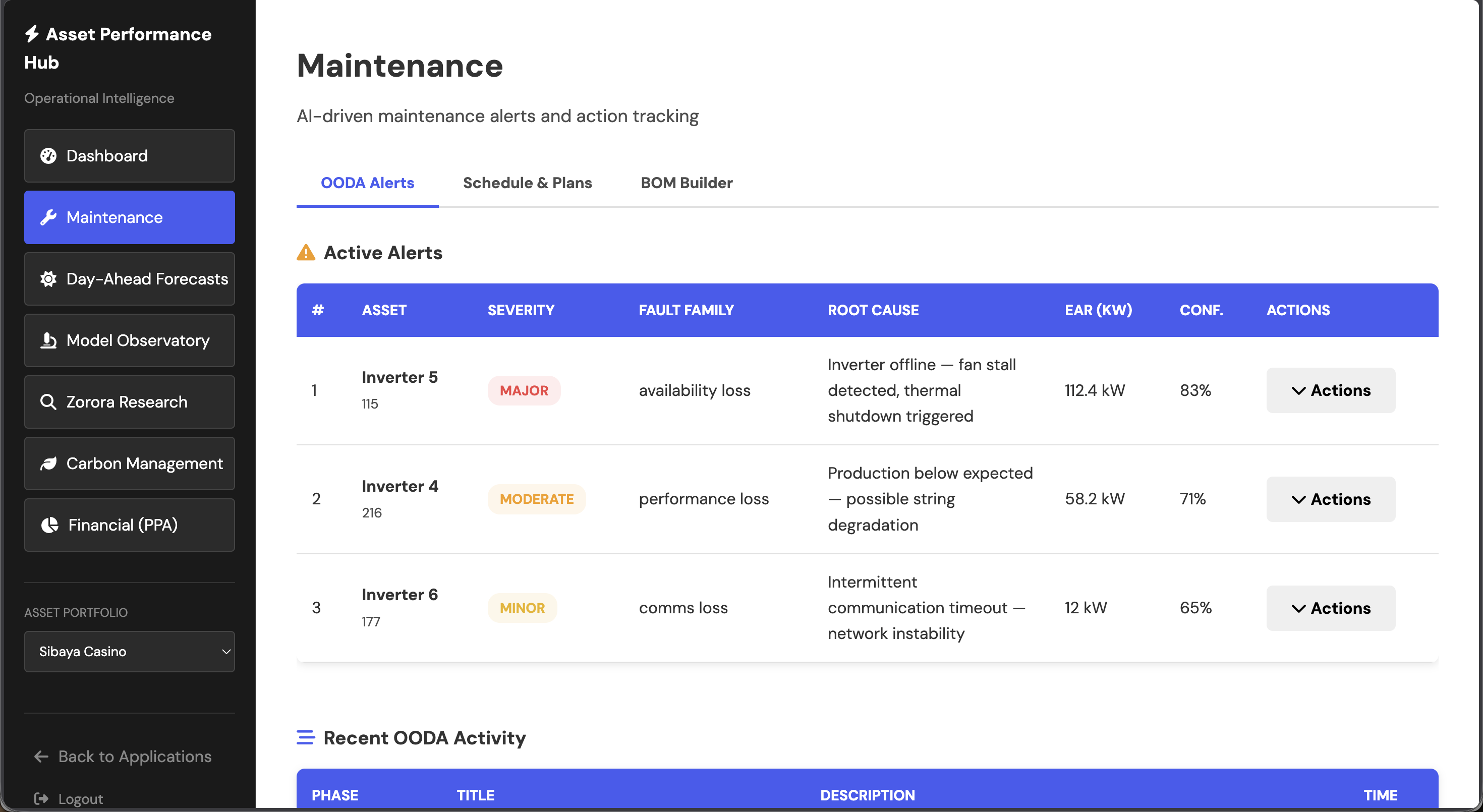
Fault Detection That Learns Each Inverter, Not Just Thresholds
Static threshold rules can't tell a failing inverter from one running fine under cloud cover — so teams drown in false alarms until they learn to ignore the dashboard. Asoba instead builds a behavioral model of each asset's own normal operation, scores deviations continuously, and hands your team a cited next step pulled from your own OEM manuals — not just another alert.
- Up to 97% fewer false alerts at equal fault-catch rate
- Continuous severity scoring, not binary state-code flags
- Cited troubleshooting recommendations, grounded in your documentation
Forecasting
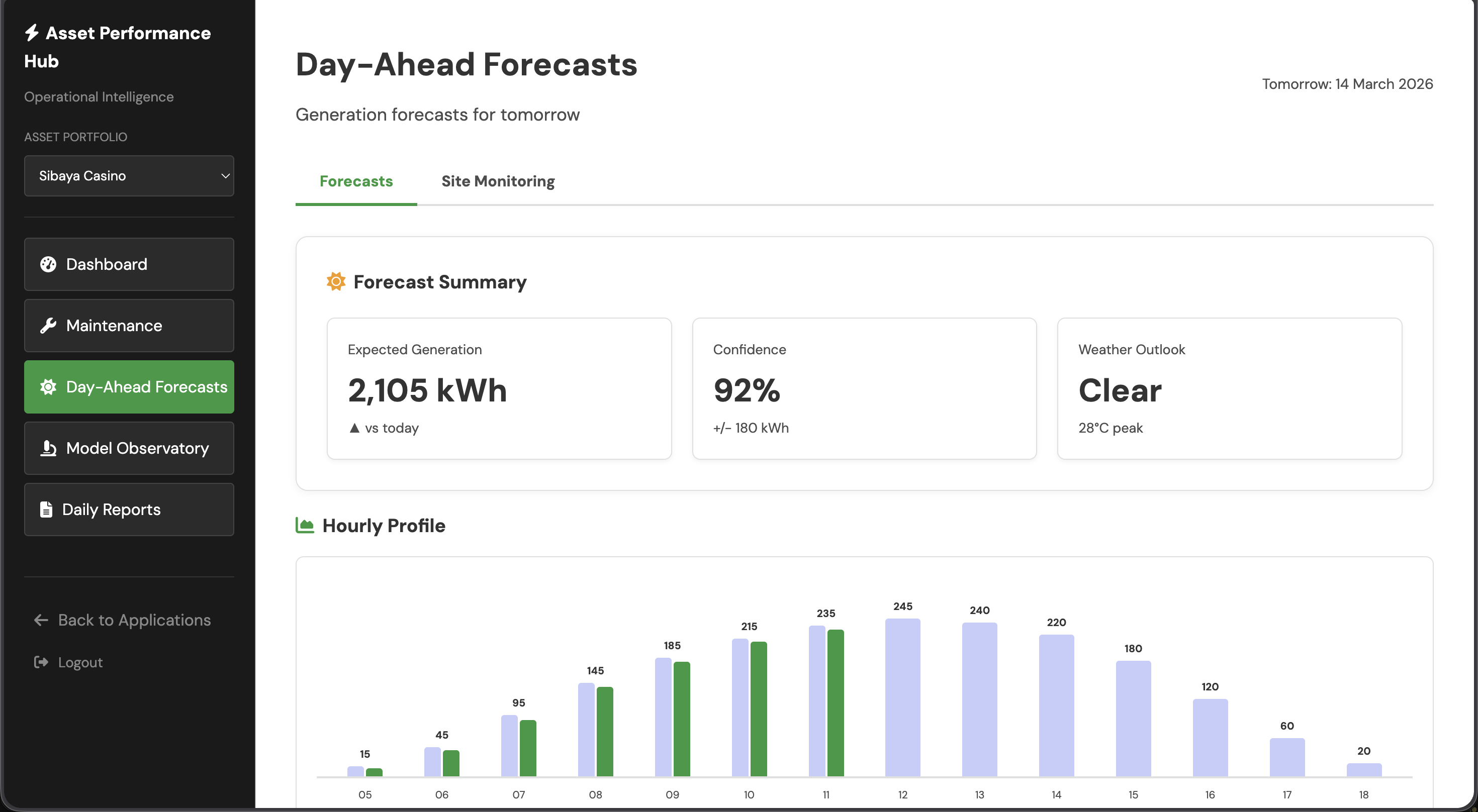
Day-Ahead and Site-Tuned Production Forecasts
Accurate generation forecasts are essential for energy trading, wheeling settlements, and portfolio planning. eSUMS forecasting models combine site-specific telemetry and weather signals to produce day-ahead and medium-horizon forecasts calibrated to real operational conditions.
- Day-ahead and medium-horizon forecasting
- Site-tuned models grounded in operational telemetry
- Forecast outputs aligned to settlement and trading workflows
Embedded Intelligence
Production-Ready APIs and SDKs
Asoba absorbs unreliable, heterogeneous inputs, manages forecasting models over time, and exposes stable outputs that production systems can depend on. Integrate once, consume intelligence directly within your existing business logic.
- REST API for universal integration
- Python and JavaScript SDKs for rapid development
- Stable outputs from unstable telemetry
// REST API Request
POST /forecast
{
  "site_id": "Site-A",
  "forecast_hours": 24
}

// Response
{
  "forecasts": [
    {
      "timestamp": "2026-06-10T10:00:00Z",
      "kWh_forecast": 1250.5
    }
  ]
}
from asoba import AsobaClient
client = AsobaClient()
forecast = client.forecasting.get_forecast(
site_id='Site-A',
hours=24
)
for point in forecast:
dispatch(point.value)const { Asoba } = require('@asoba/sdk');
const asoba = new Asoba();
const forecast = await asoba.forecasting.get({
siteId: 'Site-A',
hours: 24
});
forecast.forEach(p => dispatch(p.value));Open Standard
Open Standard. No Lock-in.
The Open Data Schema for Energy (ODSE) is a community-driven standard that eliminates proprietary OEM data formats. Transform data from any inverter manufacturer into a single, validated schema with one line of code.
- Apache 2.0 Licensed
- Eliminate vendor-specific pipelines
- Standardize Huawei, SMA, SolarEdge, and more
import odse

# Transform OEM format to open standard
records = odse.transform(
    "raw_data.csv",
    source="huawei"
)

# Validate against physics + schema
result = odse.validate(records)
assert result.is_valid
Solar PV Performance Tools
Know exactly what your system is losing and why. From free energy audits to Energy At Risk reports, get the tools required to protect your solar ROI.
Energy At Risk
Audit variances between solar output and municipality meters.
ROI Estimator
Draw your roof and get instant system sizing and payback projections.
24-Hour Forecast
Upload any OEM CSV and get an AI-powered next-day forecast.
African Energy Market Intelligence
Make Better Energy Investment Decisions. Zorora brings research, due diligence, market intelligence, and regulatory insights into one unified platform.
Regional Market Research
Navigating Data-Scarce & High-Risk Markets
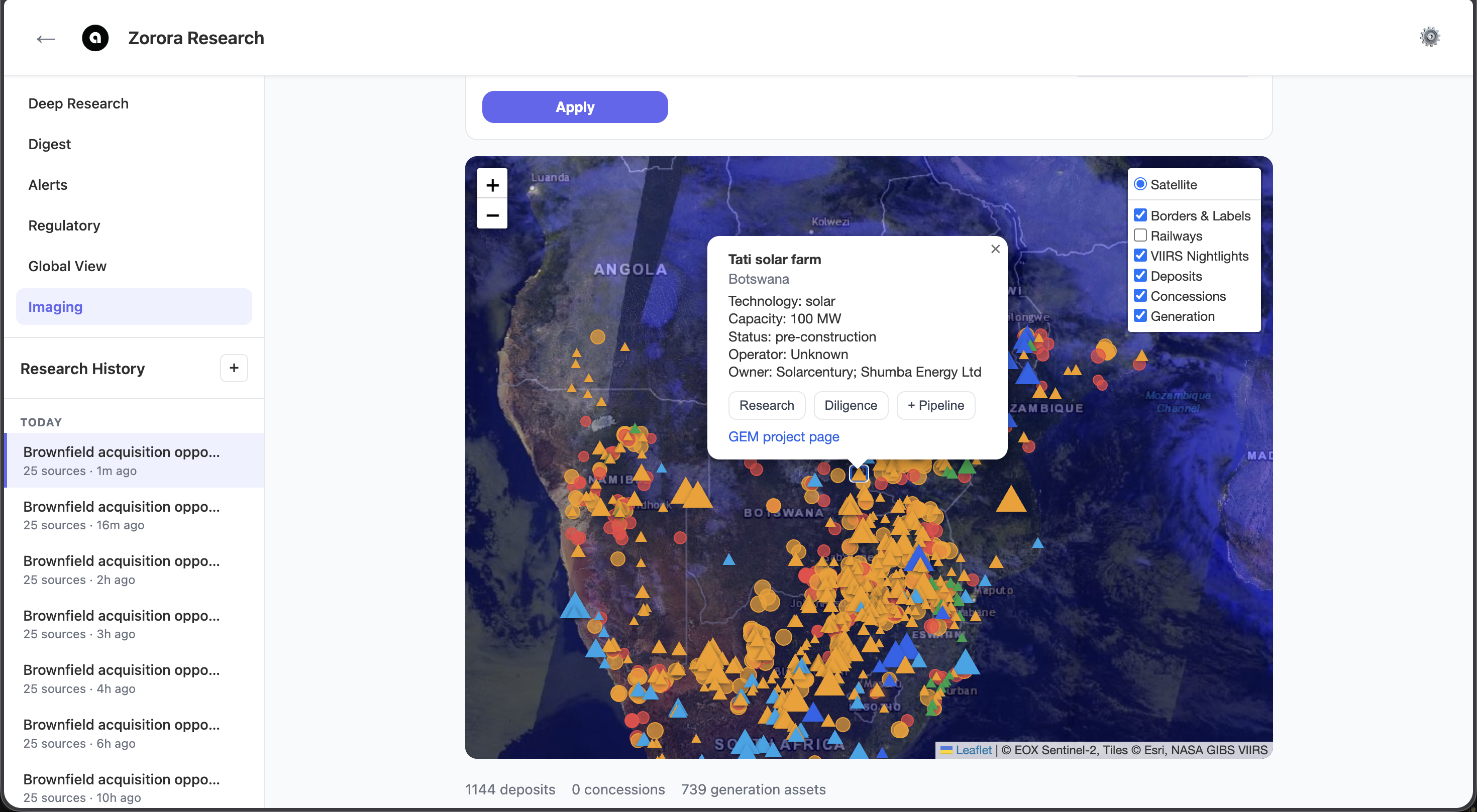
Energy deals across the continent fail for reasons that don't show up in financial models. From municipal billing disputes in South Africa to licensing shifts in the SADC region, Zorora correlates fragmented regulatory notices, SAPP price feeds, and geospatial data to provide investment teams with cited ground truth.
- Regional Diligence: Evaluate acquisition risk across SADC markets with evidence-grounded research
- Market Arbitrage: Analyze SAPP regional pricing and cross-border TOU differentials
- Geospatial Discovery: Map generation assets and mineral deposits with regional viability scoring
Our Partners


Our Story
See the Platform in Action
Watch how Asoba's intelligence infrastructure supports distributed energy markets across Southern Africa — from real-time telemetry to settlement-ready data exchange.
Stop Losing Value Hidden in Your Energy Operations
See how Asoba helps operators improve performance, reduce risk, and unlock new revenue opportunities.